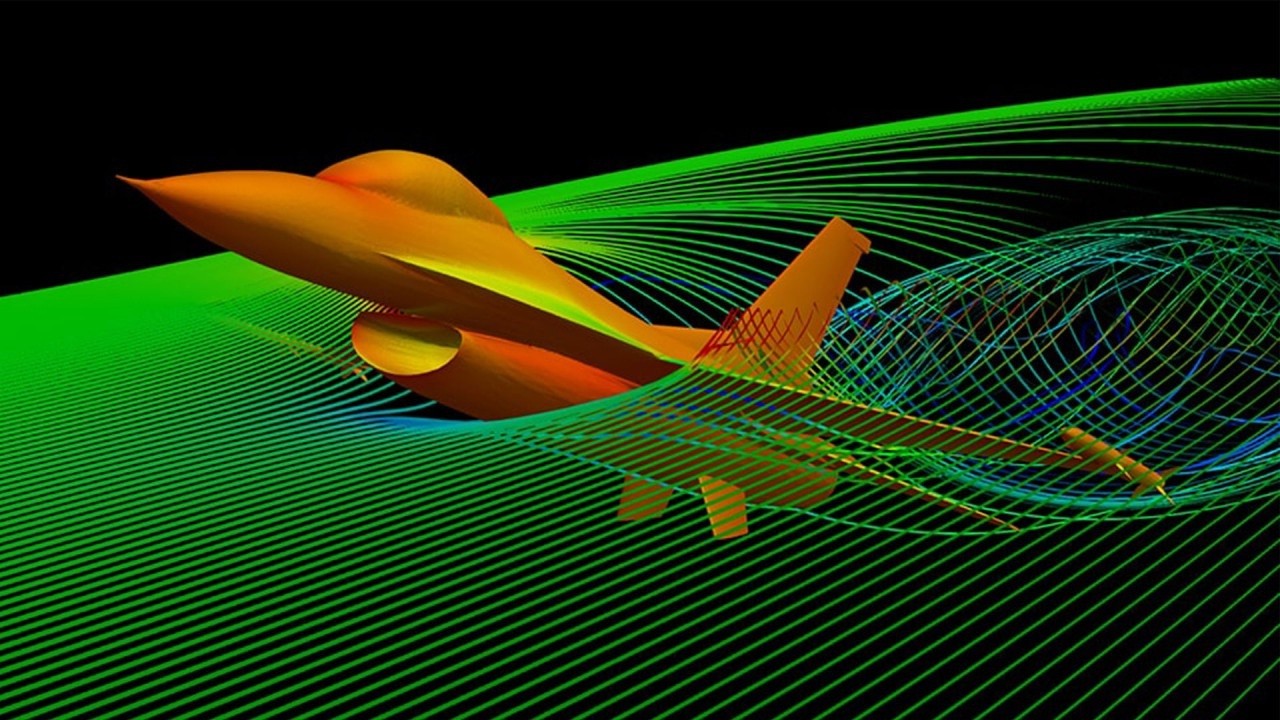
Modern engineering depends on accurate testing and smart design choices. Instead of building many physical models, engineers can now test ideas in a virtual environment before creating a real product. This is where computational fluid dynamics CFD software plays an important role. It allows engineers to study how liquids and gases move around or through objects, helping them improve designs while saving time and money. From designing safer aircraft and faster race cars to creating better heating systems and medical devices, CFD has become an essential tool across many industries.
As computers have become more powerful, CFD has also become more accurate and easier to use. Engineers can now solve complex fluid flow problems much faster than in the past. This makes it possible to test different design ideas, compare results, and make improvements without building expensive prototypes. In this guide, you’ll learn what Computational Fluid Dynamics (CFD) is, how it works, where it is used, its advantages and challenges, and how new technology continues to improve its capabilities.
What Is Computational Fluid Dynamics?
Computational Fluid Dynamics, commonly called CFD, is a method that uses computer calculations to study the movement of fluids such as water, air, gas, and other liquids. It helps engineers understand how fluids behave when they flow around objects or inside systems.
Instead of relying only on physical testing, CFD creates a digital simulation that predicts how fluids will move under different conditions. These simulations provide valuable information that helps engineers improve product performance, safety, and efficiency before manufacturing begins.
At the center of CFD are mathematical equations known as the Navier-Stokes equations. These equations describe how fluids move by considering factors such as:
- Velocity
- Pressure
- Density
- Temperature
- Viscosity
- Flow direction
Because these calculations are extremely detailed, computers solve them using numerical methods that divide the problem into thousands or even millions of small sections.
Modern CFD software also includes additional models that simulate more advanced situations, including:
- Turbulent airflow
- Heat transfer
- Chemical reactions
- Combustion
- Multiphase flow involving liquids and gases together
- Compressible flow at high speeds
These capabilities allow engineers to analyze situations that would be difficult, expensive, or even impossible to test physically.
How Computational Fluid Dynamics Works and Where It Is Used
A CFD simulation follows several important steps that work together to produce reliable results.
1. Creating the Digital Model
The first step is building a 3D model of the object or system being studied. This could be an airplane wing, a vehicle, a pipeline, a medical device, or even an entire building.
The digital model must accurately represent the real object because the quality of the simulation depends on it.
2. Meshing the Model
Once the geometry is complete, the model is divided into many small pieces called cells or elements. This process is known as meshing.
The computer performs calculations inside every cell, allowing it to predict how fluids move throughout the entire model.
The quality of the mesh greatly affects the final results.
A finer mesh offers:
- Better accuracy
- More detailed flow information
- Better predictions near surfaces
However, finer meshes also require:
- More computer memory
- Longer processing times
- Greater computing power
Many engineers use adaptive meshing, which automatically creates smaller cells only in areas where greater detail is needed. This helps improve accuracy without making simulations unnecessarily slow.
3. Setting Up the Simulation
After meshing, engineers enter the physical conditions of the problem.
These settings may include:
- Fluid type
- Flow speed
- Temperature
- Pressure
- Boundary conditions
- Turbulence model
- Material properties
Choosing the correct settings is essential because they determine how realistic the simulation will be.
4. Solving the Equations
The software then begins solving millions of mathematical calculations.
Rather than solving everything at once, the computer works through many repeated calculations. During each cycle, the solution becomes more accurate until the results stop changing significantly.
This process is called convergence.
Convergence means the software has reached a stable solution, giving engineers confidence that the simulation accurately represents the real-world behavior of the fluid.
Engineers also monitor residual values and other performance indicators to confirm that the solution has truly stabilized.
5. Reviewing the Results
Once the calculations are complete, the software creates visual images that make the results easier to understand.
Common visualization tools include:
- Flow streamlines
- Pressure maps
- Temperature contours
- Velocity plots
- Vector displays
- Animated flow patterns
These graphics help engineers quickly identify areas where designs can be improved.
Benefits of Computational Fluid Dynamics
CFD has become one of the most valuable engineering tools because it offers many important advantages.
Lower Development Costs
Physical testing can be expensive because it often requires several prototypes.
With CFD, engineers can test many design options digitally before manufacturing begins, reducing development costs.
Faster Product Development
Instead of waiting weeks to build and test physical models, engineers can perform virtual simulations much more quickly.
This allows companies to develop products faster and reach the market sooner.
Better Design Quality
CFD helps identify design problems early in the development process.
Engineers can adjust shapes, improve airflow, reduce pressure loss, and optimize cooling before final production.
Improved Safety
Many industries use CFD to study dangerous situations that would be difficult to recreate physically.
Examples include:
- High-speed aircraft
- Engine combustion
- Chemical mixing
- Fire and smoke movement
- Flood prediction
Detailed Visualization
Unlike physical testing, CFD allows engineers to view fluid behavior throughout the entire system.
They can examine pressure, velocity, temperature, and turbulence in locations that would normally be impossible to measure.
Challenges of CFD
Although CFD offers many benefits, it also has some limitations.
High Computing Requirements
Large simulations often involve millions of cells and billions of calculations.
These simulations may require powerful computers or cloud computing resources.
Skilled Users Are Needed
Accurate CFD results depend on the knowledge of the engineer.
Incorrect settings, poor mesh quality, or unrealistic assumptions can produce inaccurate results.
Experimental Validation
Although CFD is highly accurate, engineers often compare simulation results with physical testing to confirm their reliability.
Combining simulations with real-world testing provides the greatest confidence in the final design.
Industries That Use CFD
Computational Fluid Dynamics has become an essential tool across many engineering fields.
Aerospace
Aircraft manufacturers use CFD to improve:
- Wing performance
- Engine efficiency
- Fuel consumption
- Aircraft stability
- High-speed flight performance
Automotive
Vehicle manufacturers rely on CFD to:
- Reduce air resistance
- Improve fuel economy
- Increase electric vehicle range
- Enhance engine cooling
- Improve passenger comfort
Heating, Ventilation, and Air Conditioning (HVAC)
CFD helps engineers design buildings with:
- Better airflow
- More comfortable indoor temperatures
- Improved energy efficiency
- Better ventilation systems
Biomedical Engineering
Medical researchers use CFD to study:
- Blood flow
- Heart valve performance
- Artificial blood vessels
- Respiratory devices
- Drug delivery systems
Electronics
Electronic devices generate heat during operation.
CFD helps engineers improve cooling systems for:
- Computers
- Data centers
- Smartphones
- Power electronics
- Electric vehicle batteries
Oil and Gas
Energy companies use CFD to analyze:
- Pipeline flow
- Pump performance
- Gas transport
- Mixing processes
- Equipment safety
Environmental Engineering
CFD is also useful for environmental studies such as:
- Air pollution
- Water flow
- Flood prediction
- Wind movement
- Smoke dispersion
New Technologies Improving CFD
Modern technology continues to make CFD faster and more capable.
Artificial Intelligence
Artificial Intelligence helps speed up simulations by learning from previous results.
AI can also automate design optimization, allowing engineers to evaluate many design options much faster.
Machine Learning
Machine learning models improve prediction accuracy while reducing the time needed for some complex simulations.
These tools become smarter as they process more engineering data.
Digital Twins
Digital twins are virtual versions of real machines or systems.
By combining real-time sensor data with CFD simulations, engineers can monitor equipment, predict maintenance needs, and improve performance while systems are operating.
High-Performance Computing
Many modern CFD simulations run on powerful computer clusters that solve millions of calculations simultaneously.
This greatly reduces simulation time for large engineering projects.
Cloud Computing
Cloud-based CFD allows companies to access powerful computing resources without purchasing expensive hardware.
This makes advanced simulation technology available to businesses of all sizes.
Real-World Examples of CFD
CFD continues to deliver measurable improvements across many industries.
In the automotive industry, manufacturers use CFD to reduce drag, allowing vehicles to consume less fuel and improve overall performance.
Aircraft companies optimize wing designs and engine airflow to improve fuel efficiency while maintaining safety and stability.
Medical companies develop more effective inhalers, artificial heart valves, and blood flow devices through CFD simulations that improve patient care.
Environmental engineers use CFD to predict how smoke, pollutants, and harmful gases spread through cities, industrial sites, and waterways, helping improve public safety and environmental planning.
Conclusion
Computational Fluid Dynamics has transformed the way engineers design products and solve complex fluid flow problems. By replacing much of the physical testing process with accurate virtual simulations, CFD reduces development costs, shortens design time, and improves product quality.
As Artificial Intelligence, cloud computing, digital twins, and high-performance computing continue to evolve, CFD will become even faster, more accurate, and more accessible. Whether designing aircraft, improving vehicles, creating medical devices, or building energy-efficient systems, Computational Fluid Dynamics will remain one of the most valuable tools in modern engineering for years to come.